
Epoxy Flooring in Ann Arbor, MI
Showroom grade garage, basement, and concrete coatings built for Michigan winters.
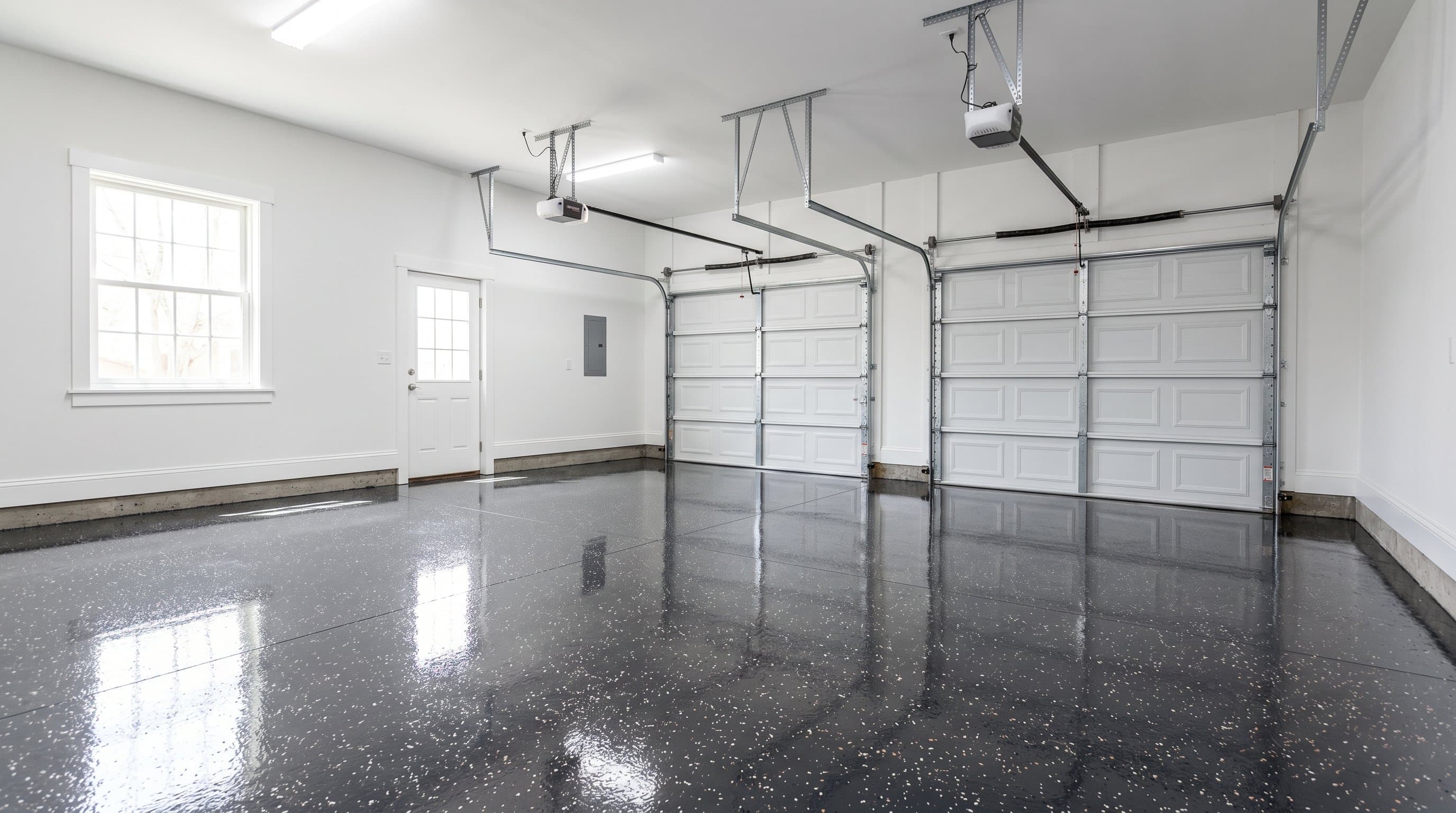
What epoxy flooring is, and why it lasts in Michigan
Epoxy flooring is a type of flooring made from layers of resin applied to a prepared concrete slab and cured into a smooth, glossy surface that water, road salt, gear oil, and brake fluid can't soak into. Every one of those layers starts as a two-part product, a resin and a hardener mixed on site minutes before the pour, and the reaction between the two is what turns a liquid into a wear surface tougher than the slab it covers. That matters in Ann Arbor and the rest of Washtenaw County for one specific reason: Michigan concrete is subjected to freeze-thaw cycles for roughly six months of the year, and the same road salt that comes in on every SUV tire eats unsealed garage slabs from above and below. A proper garage epoxy flooring system seals the slab on both faces so the brine never reaches the concrete.
A real epoxy flooring install runs four passes, not one. A vapor mitigating primer reads first, sized to the slab's actual moisture number rather than picked from a catalog. A 100 percent solids epoxy base carries the structural bond into the ground concrete profile. Vinyl chips broadcast wet into that base layer build the depth and grip, locking in by gravity and surface tension before the resin sets. A polyaspartic topcoat finishes the floor, an aliphatic urethane that cures faster and harder than the epoxy underneath and stays clear under daylight rather than ambering with age. Done correctly, epoxy flooring is a layered system, not a single rolled coat. Experienced epoxy flooring contractors run every one of those four passes in sequence rather than shortcutting the job to one bucket of paint.
The water-based kits stocked at the home center are a single soft layer over an unground slab. They tend to cure tacky, amber inside a season, and lift under the first hot tire of summer. The full epoxy flooring system with all four passes is what reputable installers in the Ann Arbor area actually run, and the same stack scales: epoxy garage flooring on a 400 sq ft two-car slab, a 1,200 sq ft finished basement off Pauline Boulevard, a 10,000 sq ft warehouse off State Street. Only the material volume changes. Whether the job is garage epoxy flooring over a two-car slab or an epoxy flooring install across a finished basement, the same four passes go down in the same order. Down in Arkansas, a Fort Smith epoxy flooring crew runs that same four-pass stack.
The coating system your concrete actually needs
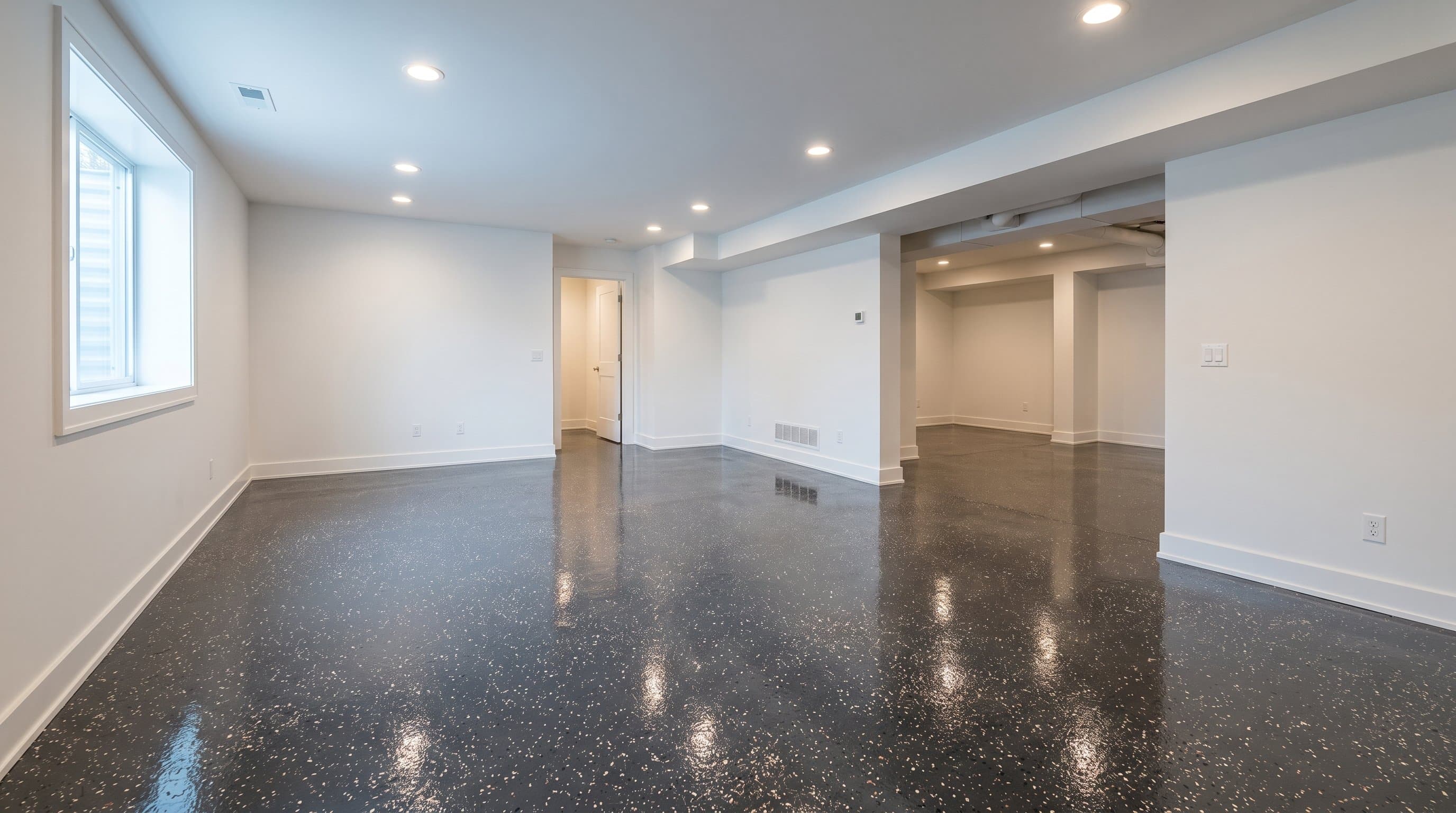
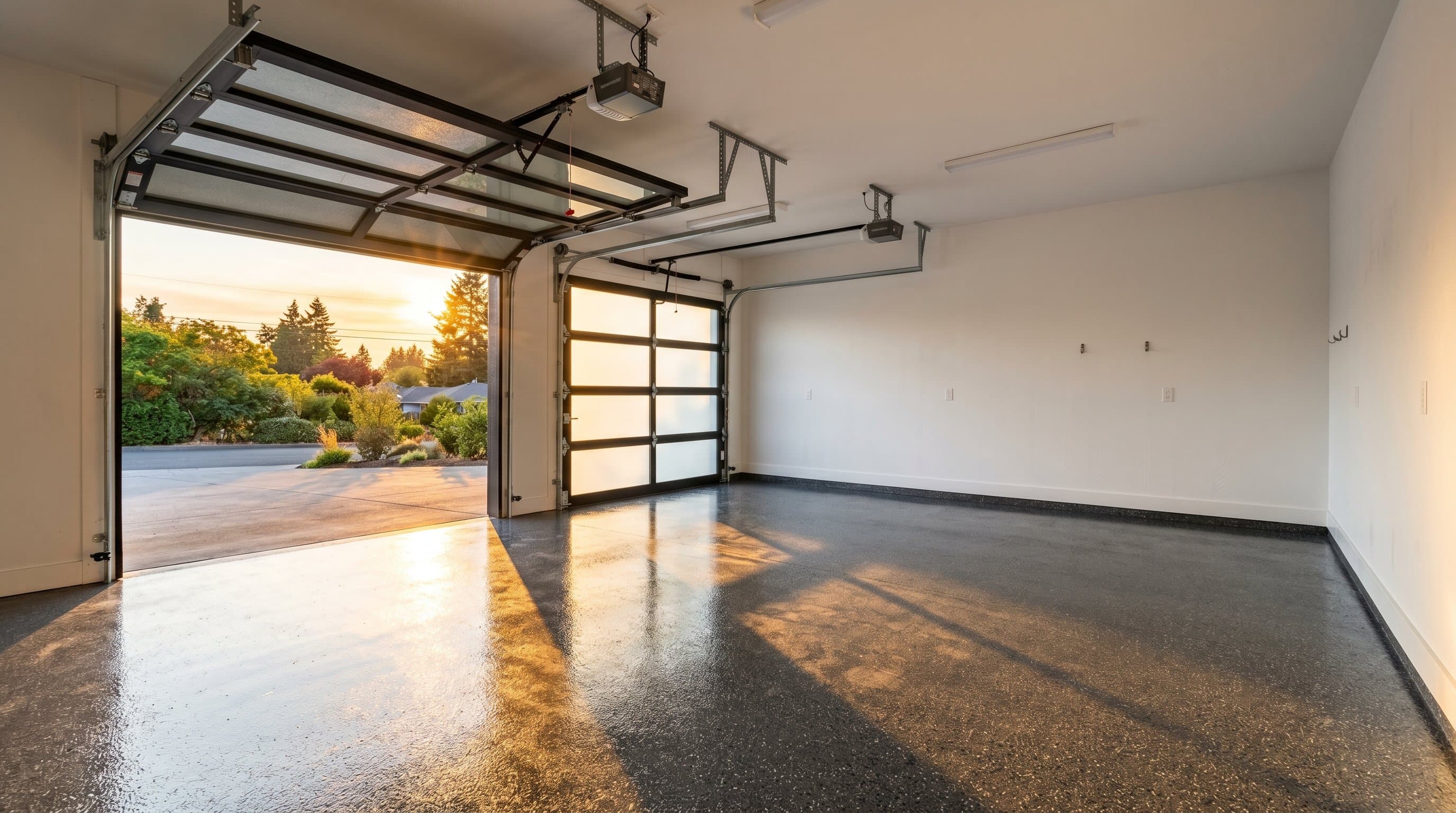
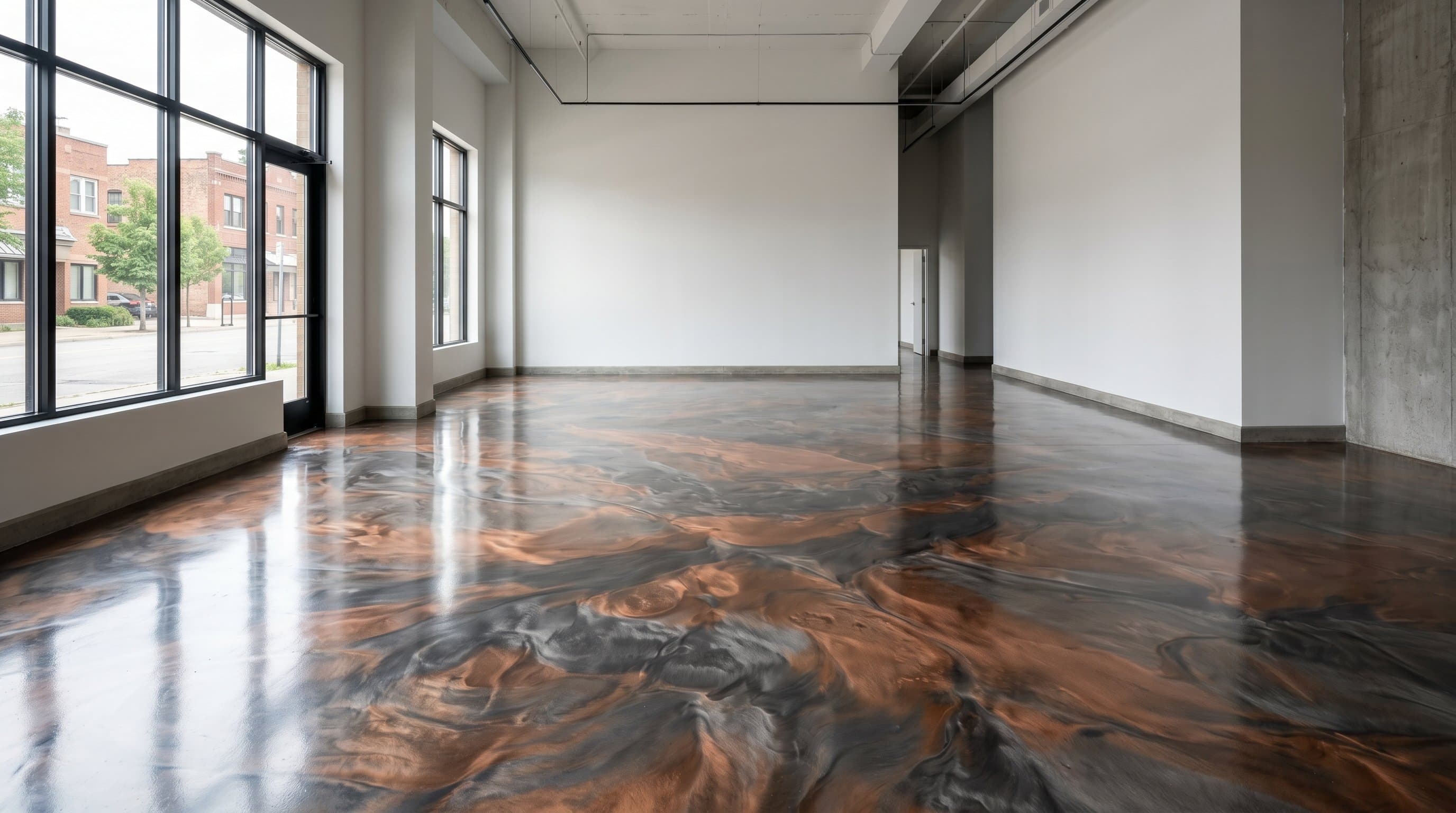
Eight surfaces a Ann Arbor, MI coating system covers.
Garage Floor Epoxy
How a resin floor with four coats goes down, and why it lasts through a Michigan winter.
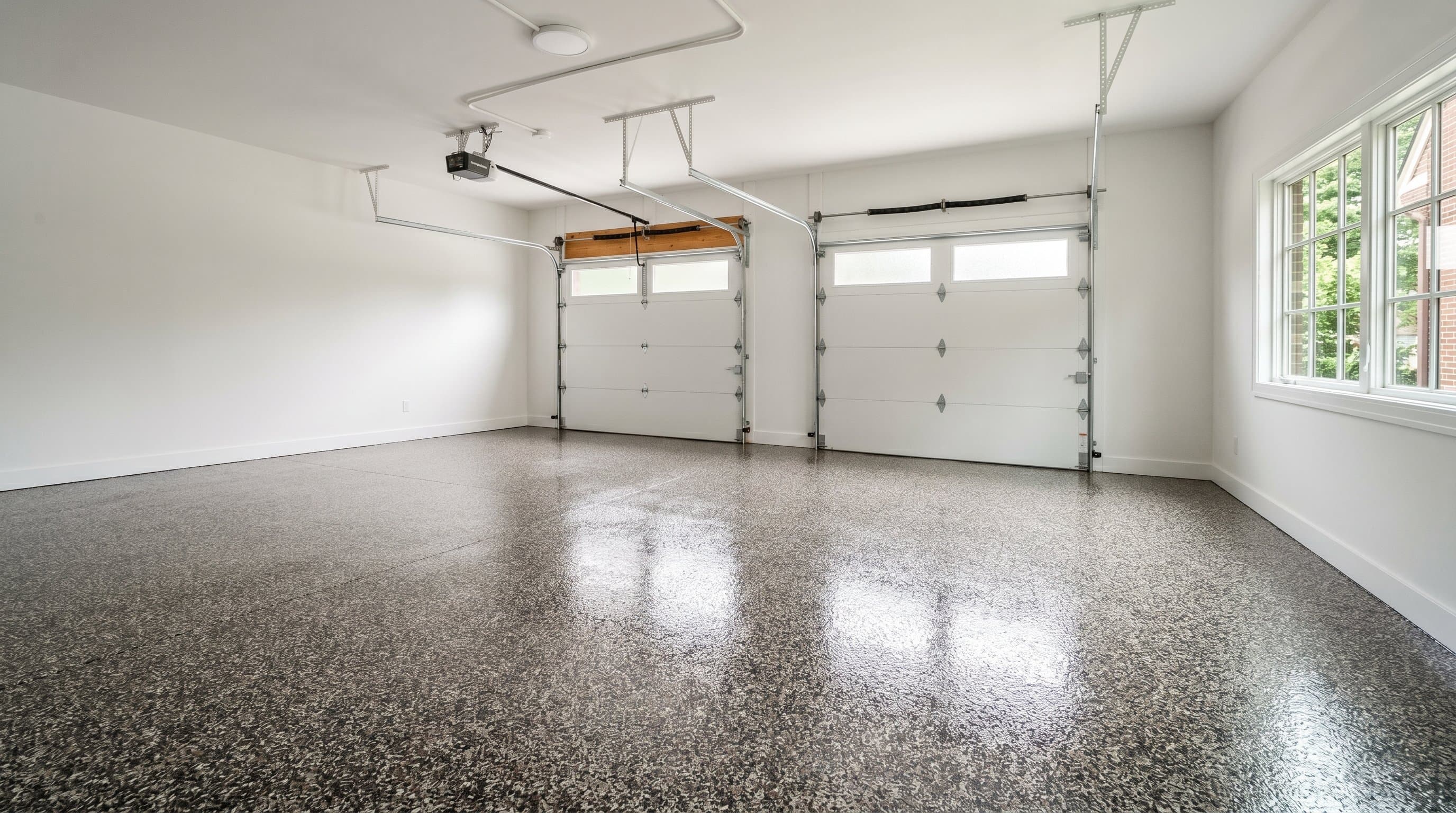
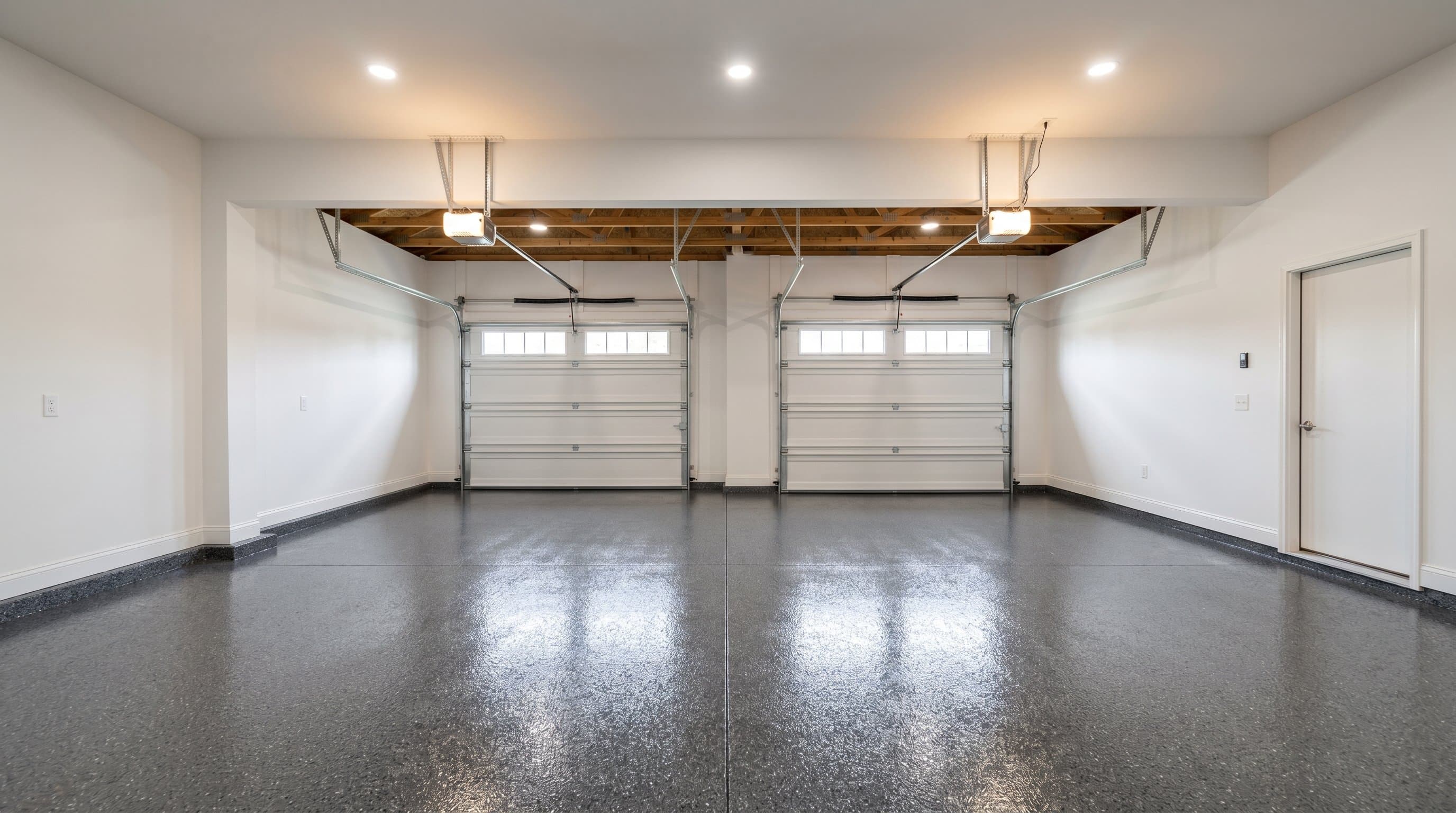
A garage in Burns Park or off Stadium Boulevard usually sits on a slab that soaked up salt slush and dropped oil for twenty winters. Stand on it. The surface chalks under your shoe. That chalk is the slab giving up. The boxed kit from the home center buries the chalk under thin resin. It looks fine in May. It hazes by August. The first hot tire of summer pulls it off in patches. The fix is not another bucket of paint. It is a system built for the damp and the salt this region puts down.
- A two-car garage wraps in one working day. Walk on it that evening.
- Cars roll back onto the slab about a day after topcoat goes down.
- Flake texture adds grip when boots track in salt slush in February.
Basement Floor Epoxy
A coating sized to the actual vapor reading off the slab. Not a guess from a phone photo.
The basements under Old West Side and Water Hill homes have been pushing moisture vapor up through their slabs for over a century. A cheap film of paint over that slab is not a coating. It is a sacrifice that lasts one summer. The slab itself is rarely the problem. The product on top of it is. Painting it again, or laying peel and stick vinyl on top, repeats the same mistake with a new label on the bucket.
- Primer is sized to the actual vapor off the slab, not picked from a catalog.
- A light or warm base reflects ambient light back into the room.
- Polyaspartic topcoat does not slip under furniture, exercise gear, or pet paws.
Polyaspartic Epoxy Coatings
The topcoat that stays clear in daylight and cures fast enough to walk on by evening.
The shorthand epoxy floor hides a real difference. Pure epoxy as a topcoat turns yellow in sunlight. It gets gummy in late July heat. And it asks for one to three days of cure before anything heavier than a soft shoe touches it. Polyaspartic was built to skip all three problems. It is also the chemistry that turns the one-day install schedule into a real promise instead of a marketing line.
- Cures to foot traffic in about two hours. Cars roll on the slab in a day.
- Stays clear under a skylight, a window well, or a garage door open all afternoon.
- Tests harder than a standard industrial floor sealer, so hot tires do not pick at it.
Metallic Epoxy
Mica suspended inside the resin, moved by hand during the wet window before the polyaspartic locks it in.
Metallic epoxy reads as a designer floor and acts like one. Mineral mica pigment is suspended inside the resin. The chips get moved around during the wet window with rollers, brushes, squeegees, and small drops of alcohol. The chips end up at many different angles. Under good lighting the result reads almost three dimensional (a finished basement bar in Burns Park, an entry foyer in Ann Arbor Hills, a polished garage in Saline). Plenty of metallic installs online look amazing in the photo and dull in person. That gap shows up when the install skipped the structural layers underneath. The pigment is only the part you see.
- Common blends here: copper on slate, polished nickel, storm blue, warm walnut.
- Sealed under polyaspartic. Same chemical and daylight toughness as any other system.
- Install runs two days. The metallic pour needs its own cure window before the topcoat.
Decorative Flake Epoxy
Vinyl chips thrown to rejection over a wet base, locked in under polyaspartic. The most common home finish for real reasons.
If a finished epoxy floor has been seen in person and not just in a phone photo, it was almost always a flake or chip system. A full broadcast of vinyl flake is the popular home finish for a list of real reasons. The texture adds grip underfoot. It is not a smooth sheet when wet. The chip pattern hides scuffs, tire marks, and the small flaws every older Ann Arbor garage carries. The depth reads richer than a solid pigment epoxy ever does. And the texture is more forgiving of an aged slab than a glassy metallic, which needs a near perfect surface.
- Throw continues until the wet base rejects more flake. Full coverage, no pebble look.
- Hides scuffs, tire ghosts, hairline cracks, and the small flaws every old garage has.
- Texture adds grip when boots track in salt brine in late February.
Epoxy Repair and Recoat
Open a small test grind to read the failure. Take the bad coating off. Lay down the system that should have been spec'd the first time. Most jobs wrap in a day.
An Ann Arbor garage with peeled, chipping, hazed, or gummy epoxy is almost always a coating story. Not a concrete story. The slab is fine. The product on top of it was the wrong call. Failures cluster around three causes. Cheap garage epoxy flooring kits from the home center, with one soft water based layer, peel inside two or three winters. Epoxy floors without a polyaspartic on top yellow and turn gummy through the first July. Coatings put straight onto an unprimed slab lift in whole sections once the vapor pressure underneath builds. Each of the three is fully fixable. But only after the failed product comes off in full.
- Test grind during the walk-through. The quote follows the reading, not a guess.
- Failed coating gets fully removed back to fresh concrete. Not feathered into a thin refresh.
- Mortar patching for slab zones where the failed coating took concrete up with it.
Quote on Monday. Walk on it by Friday.
Free walk-through
Prep the slab
Coat and broadcast
Polyaspartic topcoat
Questions Ann Arbor homeowners ask
How much does epoxy flooring cost per square foot in Ann Arbor?
How long does an epoxy floor last?
Is epoxy flooring a good idea for a Michigan garage?
What is the difference between a DIY epoxy kit and a professional install?
How long does epoxy floor installation take?
Ready for a real Ann Arbor floor?
Send a few photos or book a free 15-minute on-site walk-through. A fixed written quote within one business day.